ICPC 2018 · Problem G · Panda Preserve
Statement
Time limit: 10 seconds
Last month, Sichuan province secured funding to establish the Great Panda National Park, a natural preserve for a population of more than giant pandas. The park will be surrounded by a polygonal fence. In order for researchers to track the pandas, wireless receivers will be placed at each vertex of the enclosing polygon and each animal will be outfitted with a wireless transmitter. Each wireless receiver will cover a circular area centered at the location of the receiver, and all receivers will have the same range. Naturally, receivers with smaller range are cheaper, so your goal is to determine the smallest possible range that suffices to cover the entire park.
As an example, Figure G.1 shows the park described by the first sample input. Notice that a wireless range of does not suffice (a), while the optimal range of covers the entire park (b).
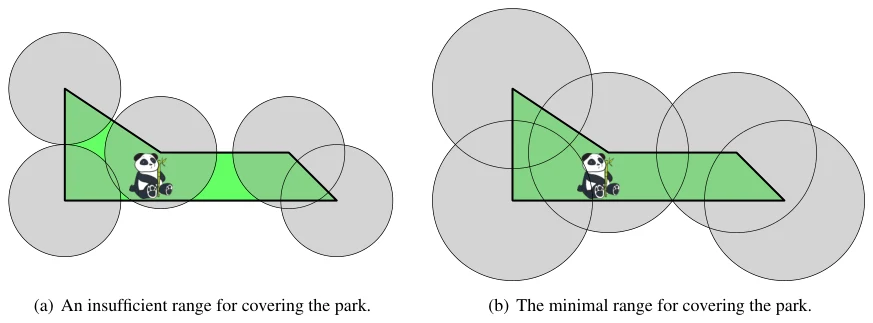
Figure G.1: Illustration of Sample Input 1.
Input
The first line of the input contains an integer () specifying the number of vertices of the polygon bounding the park. This is followed by lines, each containing two integers and () that give the coordinates of the vertices of the polygon in counter-clockwise order. The polygon is simple; that is, its vertices are distinct and no two edges of the polygon intersect or touch, except that consecutive edges touch at their common vertex.
Output
Display the minimum wireless range that suffices to cover the park, with an absolute or relative error of at most .
ACM-ICPC World Finals 2018 Problem G: Panda Preserve
Sample Input 1
5
0 0
170 0
140 30
60 30
0 70
Sample Output 1
50
Sample Input 2
5
0 0
170 0
140 30
60 30
0 100
Sample Output 2
51.538820320
Sample Input 3
5
0 0
1 2
1 5
0 2
0 1
Sample Output 3
1.581138830
ACM-ICPC World Finals 2018 Problem G: Panda Preserve
No official solution in the source collection.