ICPC 2025 · Problem F · Herding Cats
Statement
You are opening a cat cafe in Baku and would like to take a promotional photograph of all the cats sitting in the front window. Unfortunately, getting cats to do what you want is a famously hard problem. But you have a plan: you have bought a collection of catnip plants, each of a different variety, knowing that each cat likes some of these varieties. There is a row of pots in the window, numbered to in order, and you will place one plant in each pot. Each cat will then be persuaded (by means of a toy on a string) to walk along the row of pots from to . As soon as a cat reaches a pot with a catnip plant that it likes, it will stop there, even if there already are other cats at that plant.
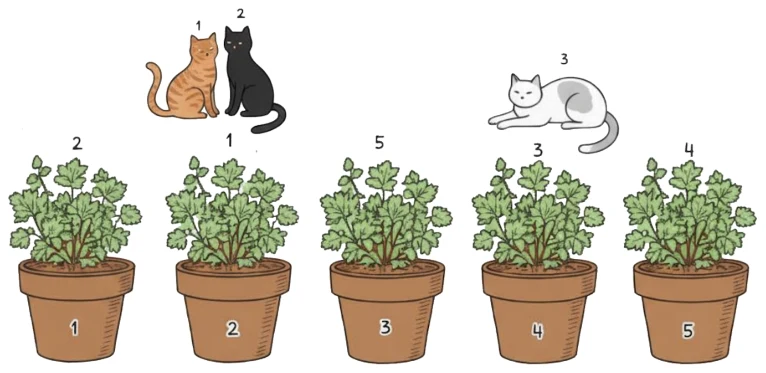
Figure F.1: One possible plant ordering for the first sample test case.
You know which pot you would like each cat to stop beside. Can you find a way in which to place the plants in the pots to achieve this?
Input
The first line of input contains an integer (), which is the number of test cases. The descriptions of test cases follow.
The first line of each test case contains two integers and , where () is the number of cats, and () is the number of catnip plants (and also the number of pots). Catnip plants are numbered from to .
The following lines each describe one cat. The line starts with two integers and , where ( ) is the pot at which the cat should stop, and () is the number of catnip plants the cat likes. The remainder of the line contains distinct integers, which are the numbers of the plants that the cat likes.
Over all test cases, the sum of is at most , the sum of is at most , and the sum of all is at most .
Output
For each test case, output either yes if it is possible to arrange the catnip plants as described above, or no if not.
Sample Input 1
2
3 5
2 2 1 5
2 3 1 4 5
4 2 3 4
3 5
2 2 1 5
2 3 1 4 5
5 2 3 4
Sample Output 1
yes
no
Explanation of Sample 1: In the first test case, a possible ordering of the plants is . This way, cat will stop at pot , as it is the first pot with a plant variety that it likes. Cat will stop there as well. Cat will continue all the way to pot , as shown in Figure F.1.
No official solution in the source collection.